Today’s electric scooters offer ever-increasing range figures. For instance, the Ola S1 Pro, which we recently rode with its latest Move OS3 update incorporated, gave us a range of nearly 148km! And yet, there will still be situations where you’ll face both a lack of range, along with a lack of time (for charging your electric scooter/bike).
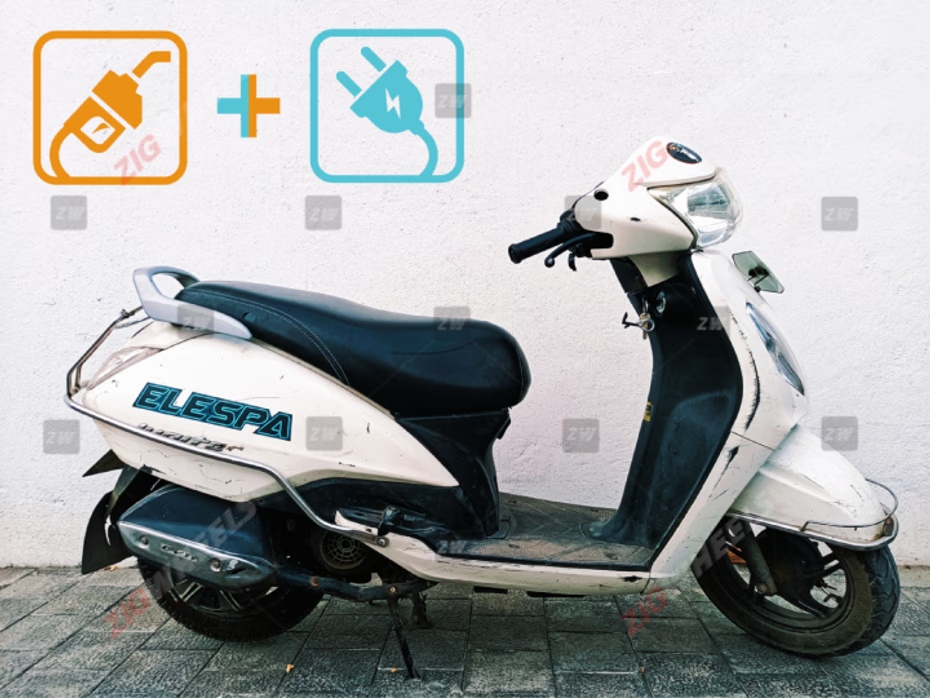
With exactly this in mind, Pune-based startup Elespa has created a conversion kit for petrol scooters. However, what sets this kit apart is that it offers electric-only as well as combined (electric and petrol) mode of travel along with the usual petrol-only mode.
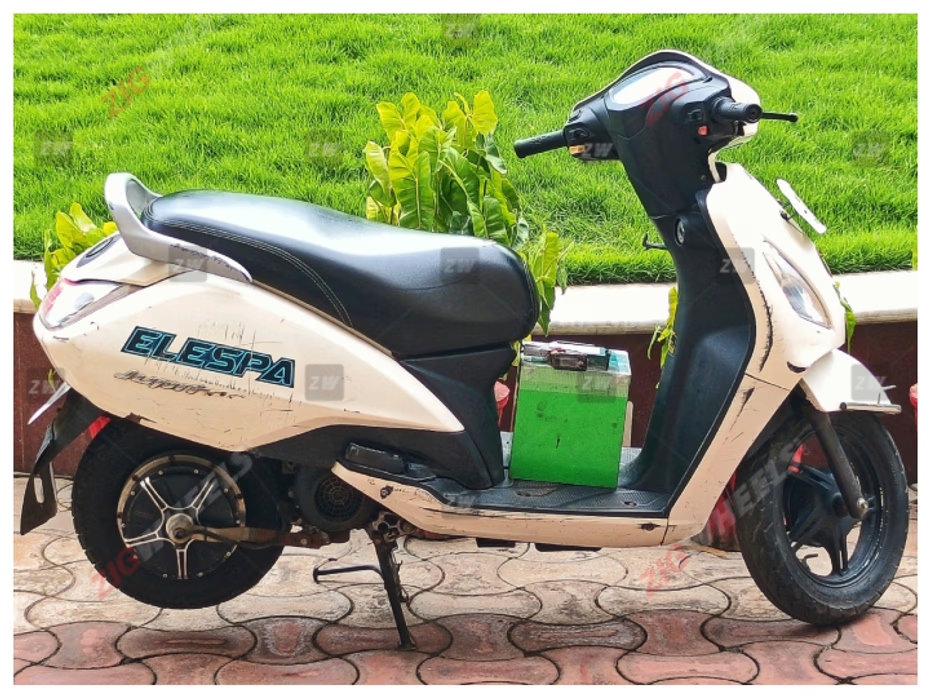
At the moment, Elespa (a portmanteau of ‘electric’ and ‘spark’, like an ICE engine’s spark plug) has mounted the kit onto a stock TVS Jupiter 110. And here we lay out all the details around the hybrid scooter.
Motor -
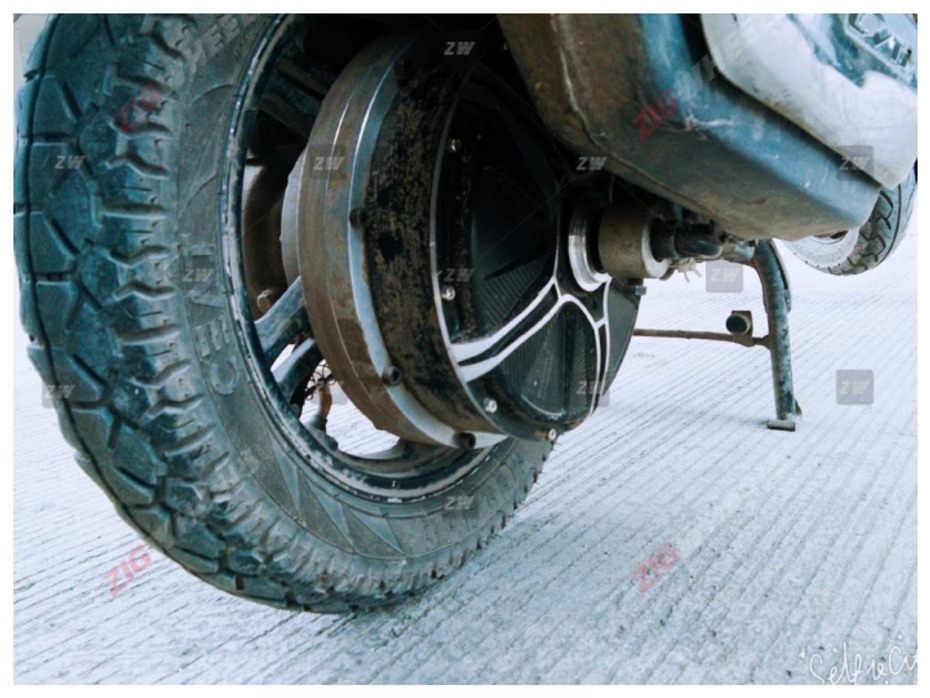
The 10-inch hub-mounted motor, rated at 1.44kW (nominal) and 3.5kW (peak), has been designed in-house from CNC-machined components, and fits easily between the silencer and the tyre. Elespa claims an IP67 rating for the motor, which should help it withstand most weather conditions. Besides, it has a claimed heat resistance of up to 80 degrees celsius along with its casing featuring fins for improved heat dissipation. Both of these are especially important considering its proximity to the exhaust.
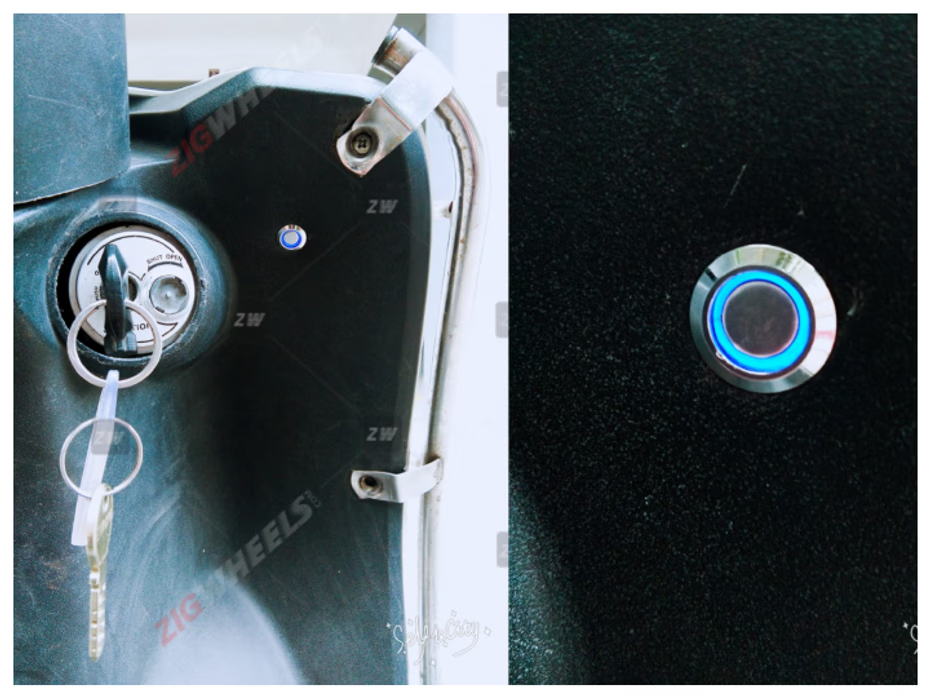
With the kit in place, and switched on via a simple household MCB switch located under the seat, the scooter switches on in pure electric mode. For a solo rider, the claimed top speed in pure electric mode is 60kmph, and about 55kmph with a pillion. Moreover, it also offers an option for a ‘boost mode’ where the motor works in conjunction with the petrol engine (switched on via the scooter’s ignition switch, on the fly), for quicker acceleration uphill or for overtaking. And finally, when you want to run on solely petrol power, pressing the apron-mounted button (with a blue backlight) switches off the electric motor.
Battery -
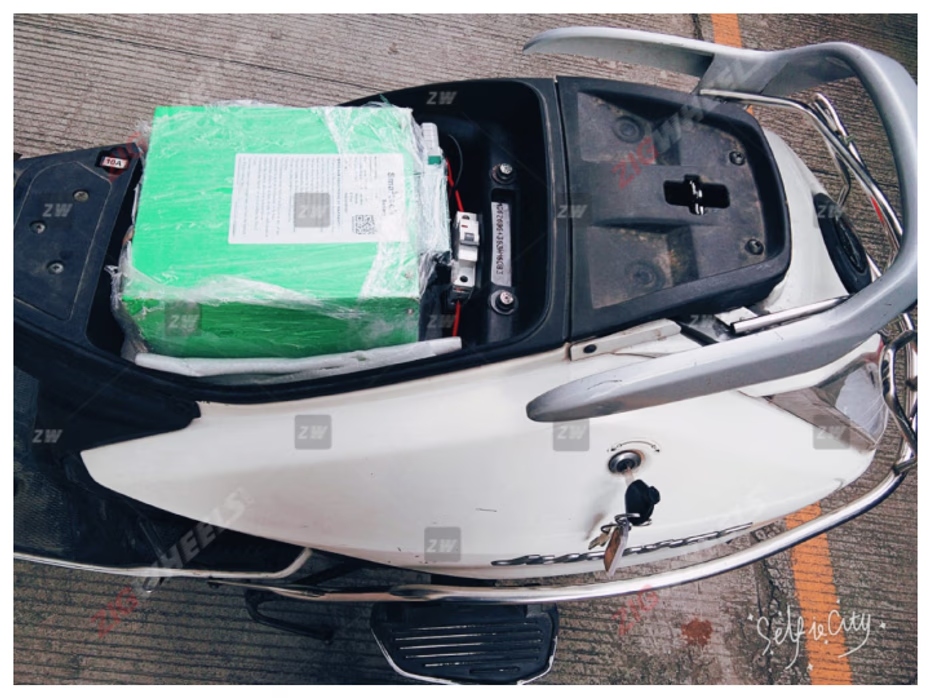
The motor works in conjunction with a removable 1.5kWh Lithium Ferro Phosphate battery. The battery can be accommodated either under the seat, or atop the floorboard within a custom-made casing. Elespa claims the battery is more efficient and reliable than a comparable Lithium ion battery, with a maximum operating temperature of 40 degrees Celsius and adequate heat resistance.
The battery can be charged up completely in a claimed four hours and offers a range of approximately 70km. Additionally, Elespa is currently working on a charging platform, which can be incorporated into your parking area, and by which the battery can be charged wirelessly!
Challenges faced -
The chief issue faced by Elespa is combating the bump in weight. While the battery weighs 16kg, the motor weighs 8kg, which brings the scooter's combined kerb weight close to 135kg. And considering the motor is bolted to the rear wheel and adds to the unsprung mass, Elespa is currently working on reducing the weight of the motor components, along with a retune to the suspension setup. Besides, the added torque from the rear wheel entails added reinforcement; in this regard Elespa has done a stop-gap arrangement of a metal brace.
Moreover, locating the battery under the seat robs the scooter of its underseat storage. Ditto with putting it on the floorboard. That said, as mentioned earlier, Elespa is in the process of making a more aesthetically agreeable housing for the battery, though that's still some time away.
Summing up
The final, and most important, part of the puzzle: price. Elespa claims a sticker price of Rs 60,000 (not including the donor scooter, of course) which isn’t cheap by any means. However, keep in mind this is the price for the one-off kit, which will reduce once Elespa brings the kit into commercial production; set to happen soon.
Ultimately, though, with the soaring prices of petrol – currently at Rs 106 per litre in Maharashtra – running a traditional scooter is already quite costly. Additionally, the regular maintenance schedule for an ICE scooter, such as periodic engine servicing and part replacements, further add up to the costs incurred.
Now, we realise wear and tear to mechanical components – such as suspension and brakes – is a given, irrespective of the scooter being electric or petrol-powered. However, an EV takes a big chunk (fuel expenses) out of the equation. On the other hand, the Elespa Hybrid Kit requires only a claimed 1.5 units of electricity – at a cost much lower than petrol – to cover close to 60km. And considering all this is possible without the niggling fear of range anxiety is the icing on the cake!